

The Surprising Link Between Anxiety and Reading and Critical Thinking
Dr. Jennifer Weber's Solution to Our Thinking Crisis

We tend to think schools teach reading, writing, and math. But what if they’re also teaching us how to think—or worse, how not to think?
In this week’s episode I interview Dr. Jennifer Weber, a behavioral scientist who started in special education and now consults with school districts. The past few years she has been connecting the dots between classroom practices, critical thinking, and our collective mental health crisis. Her insights might fundamentally change how you understand why we’re all struggling with information overload, instant reactions, and the inability to sit with uncertainty. I love her substack and was so excited to be able to talk to her!
This captures a small part of our conversation. Definitely check out the episode to hear more!
The Classroom-to-Algorithm Pipeline
I discovered Dr. Weber’s work on substack when she blew my mind with the following statement: the same behaviors that get rewarded in many classrooms (quick answers, appearing confident, guessing when you don’t know) are exactly what social media algorithms exploit.
In school, who gets called on? Usually the kid with their hand up first. What gets praised? The quick, confident answer. What happens when you don’t know something? You’re often encouraged to guess rather than say “I don’t know” or take time to think.
ANNOUNCEMENT: ITS OUR FALL SALE! Right now you can get a yearly subscription for 40% off! That means instead of paying $108 a year, you will be able to get a yearly subscription for $60!
We send out posts twice a week! You get 1-2 bonus episodes a month, pep talks with Sam, episode guides and longer comprehensive guides for how to take care of your mental health! Plus a book club and monthly hangouts are coming! As a heads up, if you upgrade through the app it charges you more! Also please make sure to use this specific link above!!
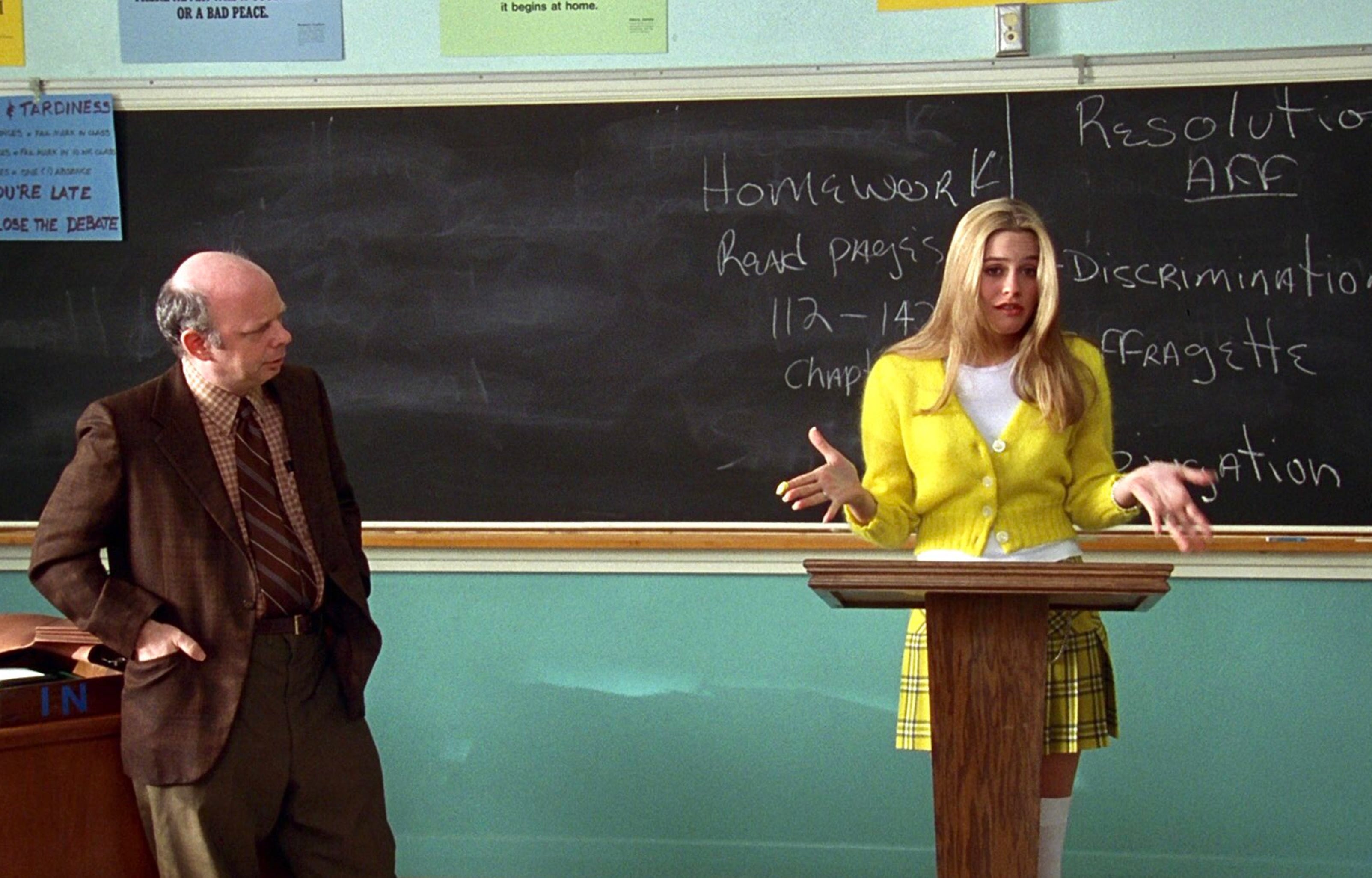
Now fast-forward to adulthood. You see something on social media. Your brain, trained for years to respond quickly, immediately reacts… like, comment, share. The algorithm notices and feeds you more similar content. You’re stuck in what Dr. Weber calls a “behavioral loop,” and it started in elementary school.
Between roughly 2010 and 2022, most U.S. schools relied on a reading method that literally taught kids to guess words they didn’t know instead of learning to decode them. If a child read “cat” as “dog,” the model didn’t correct them. It encouraged creative interpretation over accuracy.
But as Dr. Weber explained to me in the episode, this isn’t just about reading skills. When you teach children it’s okay to guess their way through fundamental learning, you’re teaching them a way of thinking. You’re reinforcing that quick responses are better than accurate ones, that guessing without learning is acceptable when you don’t know something, and that surface-level understanding is enough.
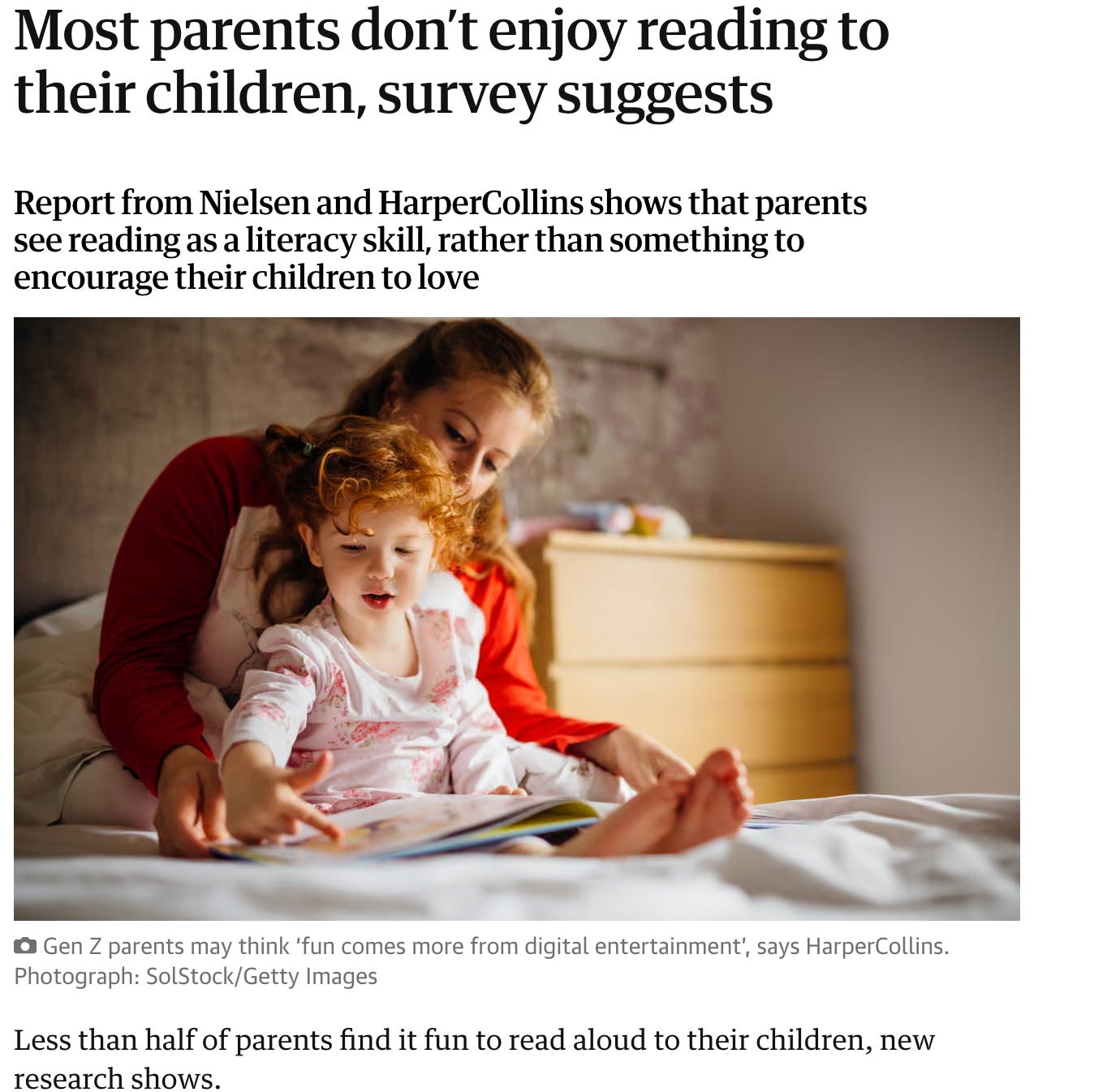
Now we have college students who’ve never read a full book, adults who can’t distinguish between credible sources and misinformation, and a society that reacts to headlines without reading articles. The connection is direct and devastating. And recent studies show less and less parents are even reading to their children at all.
Why This Matters for Your Mental Health
Dr. Weber makes a crucial point:
“If you don’t really know how you’re feeling and being able to analyze that, you’re just constantly getting things thrown at you without really being able to do much about it. And I think that causes a lot of people to just shut down because it’s just really hard to manage.”
When you can’t critically evaluate the flood of information coming at you, when you don’t have the vocabulary to name your emotions and when you’ve been trained to react instead of reflect… you end up with information overwhelm that feels paralyzing.
Consider this: most adults only know five emotion words. If you don’t have the vocabulary to understand frustration versus anger, how can you process what you’re feeling? As I realized during our conversation, reading comprehension and emotional comprehension are the same skill. If you can’t think reflectively about your thoughts or emotions, you’re more likely to ghost someone than have a difficult conversation.

Reading isn’t just about words. It’s about developing the capacity for internal dialogue. When we read, we’re both the speaker (decoding words) and the listener (making meaning). Without that internal conversation ability, we lose the capacity to process our own experiences.
This truly blew my mind.
The Lost Art of Waiting
We’ve also lost the ability to pause. Dr. Weber shares that her graduate students submit assignments at midnight and expect feedback by 6 AM. We’ve created a world where everything needs an immediate response.
As every wise person once said, the pause between stimulus and response is where you have power. It’s where critical thinking lives, emotional regulation happens and where wisdom develops.
When everything is instant we literally! lose the neural pathways for patience. And without patience, we can’t process complex emotions, develop deep relationships, or engage with challenging ideas.
When I asked Dr. Weber, so what do we do about this? She said…
The solution isn’t to throw away our phones or ban technology. It’s to rebuild our thinking patterns through small, deliberate changes. She emphasized that you can’t go from zero to 100; you need to change new behaviors gradually.
Her tips for building critical thinking skills
1. Start with a Two-Second Pause
This sounds too simple to matter, but it’s the foundation. Before clicking “like,” before responding to that text, before reacting to that headline… stop for two seconds. Ask yourself one question: “Why am I reacting this way?” This tiny pause breaks the automatic behavioral loop that keeps us trapped.
2. Rebuild Your Attention (10 Minutes at a Time)
If you are not used to reading. Don’t try to read for an hour uninterrupted. Instead, set your phone to “Do Not Disturb” for just 10 minutes. Read, work, or simply sit without interruption for that short time. Gradually increase as it becomes easier. You’re literally rebuilding neural pathways that have atrophied.
3. Ask Better Questions
Whether you’re a parent, teacher, or just trying to improve your own thinking, curiosity is the foundation. When your child says “school was good,” don’t accept it. Ask what made it good, what they learned, what confused them. When you read something online, ask where it came from, why you’re reacting to it, what’s missing from the story.
Every question you ask instead of accepting the first answer builds critical thinking capacity. As Dr. Weber notes, curiosity is what prevents us from “just agreeing with the first thing we see.”
4. Read Fiction
Reading fiction puts you inside someone else’s head in a way that scrolling never can. It builds perspective-taking abilities, emotional vocabulary, and tolerance for ambiguity. These are exactly the skills we’re losing to quick-reaction culture. When you read fiction, you are practicing holding complex, sometimes contradictory ideas in your mind simultaneously. Because humans are messy and contradictory.

For Parents and Educators
The most powerful changes happen in how we respond to “I don’t know.”
Instead of encouraging guessing, try saying “Take a moment to think about it” or “What parts do you understand?” You’re teaching that uncertainty is okay and that thinking takes time.
Stop rewarding the fastest hand raised or the most confident (even if wrong) answer. Start recognizing thoughtful questions, kids who say, “I need to think about that,” and evidence of actual thinking process over quick compliance.
Most importantly, model the behavior. Let kids see you pause, think, change your mind, admit when you don’t know something. They’re learning how to think by watching how you think.
Why There’s Actually Hope
Dr. Weber truly is optimistic, which was refreshing to hear. This is all learned behavior. What’s been reinforced can be unlearned. What’s been neglected can be rebuilt.
We’re not dealing with permanent damage. We’re dealing with habits and reinforcement patterns. Every time you pause before reacting, every question you ask instead of assuming, every moment you sit with discomfort instead of reaching for distraction, you’re rebuilding those neural pathways.
The algorithms that exploit our quick-reaction training only work because we’ve been conditioned to feed them. But conditioning can be changed.
Start small. Take the pause. Ask the question. Read the book. Your mental health is worth it!
Let me know what you think!
Xx,
Amanda
Dr. Jennifer Weber writes on Substack about behavioral science, education, and critical thinking. Find her work at Dr. Jennifer Weber. Her substack is called Think Again and learn more about her consulting at www.kitconsult.org.
Dr. Weber's argument makes so much sense! I had not thought about the connection between emotional vocabulary and emotional regulation, so thank you :). I do have one question. You (or maybe Dr. Weber) make a bold claim that "most adults only know five emotion words." Is there any good evidence for this?
Very interesting! I work at a school as an educational assistant so I do see this play out (example, hand up first is rewarded - not all the time). I'm shocked about the research re: parents don't like to read to their kids. (Maybe that's because I LOVE reading & I love to read to the kids at school? I don't have kids but I am tired after work so I can see why they wouldn't enjoy it that much)