

When Everything is Self Help
We have more mental health resources than ever. So why are we all more stuck?

Hi friends!
I saw a screenshot online recently that I haven’t been able to stop thinking about. Someone texted an acquaintance saying their grandmother had just passed away, their birthday had been that week, and they could really use a friend. The response was: “I’d like to point out that this is absolutely guilt tripping. Please don’t trauma dump in someone’s DMs without consent.”
A person reached out during one of the worst months of their life — a death, a birthday spent grieving — and gently asked if someone might want to hang out. And they were accused of violating consent by... sharing that they were struggling.
This is what we’ve done to mental health language. We’ve taken clinical vocabulary that was designed for very specific situations and handed it to everyone with a wifi connection. And I say this as someone who has contributed to the problem. I’m a therapist with a large platform. I’ve spent years teaching these concepts online. I try to be careful. But what is life changing for one person can be harmful to another and weaponized by a third.
How We Got Here
Mental health content used to be a niche corner of the internet. Then around 2019, a few therapists started joining Instagram and teaching psychological concepts to a broader audience. The quotes and graphics (as Instagram took another step away from being a photo sharing app) turned out to be perfectly designed for breaking down clinical ideas. They got saved, shared, and pushed hard by the algorithm. TikTok exploded in the US that same year, adding a second platform where mental health content could go viral overnight.
BetterHelp and Talkspace started sponsoring seemingly every podcast, normalizing therapy as something you could buy with a promo code. And then the pandemic hit. We were all isolated, all anxious, and in-person therapy became harder to access at exactly the moment demand for it skyrocketed. So people turned to the internet. Creators who'd been building audiences saw their followings explode. And everyone else saw the engagement numbers and thought, I should be making this content. (And yes, some of it was from a genuine place of wanting to help).
So the content exploded. Your coffee shop started making Instagram posts about how buying a latte is taking care of your mental health. Your plant shop told you to “do self-care” and buy a succulent. Candle companies started selling scents to heal your inner child. Every corner of the internet found a way to repackage whatever they were already selling as a mental health solution.
This is what I mean when I say everything became self-help. It’s not just that there’s more content — it’s that selling anything now requires a particular kind of persuasion. Diagnose a problem, then sell the solution. And mental health language turned out to be on of the most effective diagnosis tools on the market. It’s profitable, authoritative and sounds helpful. And it makes people feel like they’ve been seen, which keeps them coming back.
The Expertise Problem
When something is that profitable, it stops mattering whether the person selling it actually knows what they're talking about. If you look around, the most dominant self-help books, podcasts, and products are almost all run by people who have no expertise. If you actually look at who’s reaching the most people with mental health advice, it’s motivational speakers and life coaches, not clinicians.
And if you think about what a motivational speaker actually does, their job is to get you fired up. It’s not about understanding you or helping you in any meaningful, sustained way. It’s about the moment. The high. The feeling that everything is about to change. Then you go home and nothing has changed, because the person on stage doesn’t know you and whether their advice will actually apply to your life.
With coaches, it’s a different version of the same problem. Now to be clear, because some of you will not like this, there are some excellent coaches out there. I especially think specific coaches (dating coaches, friendship coaches etc) are great and fill a need. But most life coaches have very little training. Some even call themselves a “therapist” because that word is not protected. There is no governing body, so anyone can call themselves a coach for any reason. As a result, you end up with some very bad and harmful coaches who heavily rely on themselves as evidence of their success. I was able to do this, so you can too! Couple this with a growing disinterest in experts and you have a recipe for a real problem.
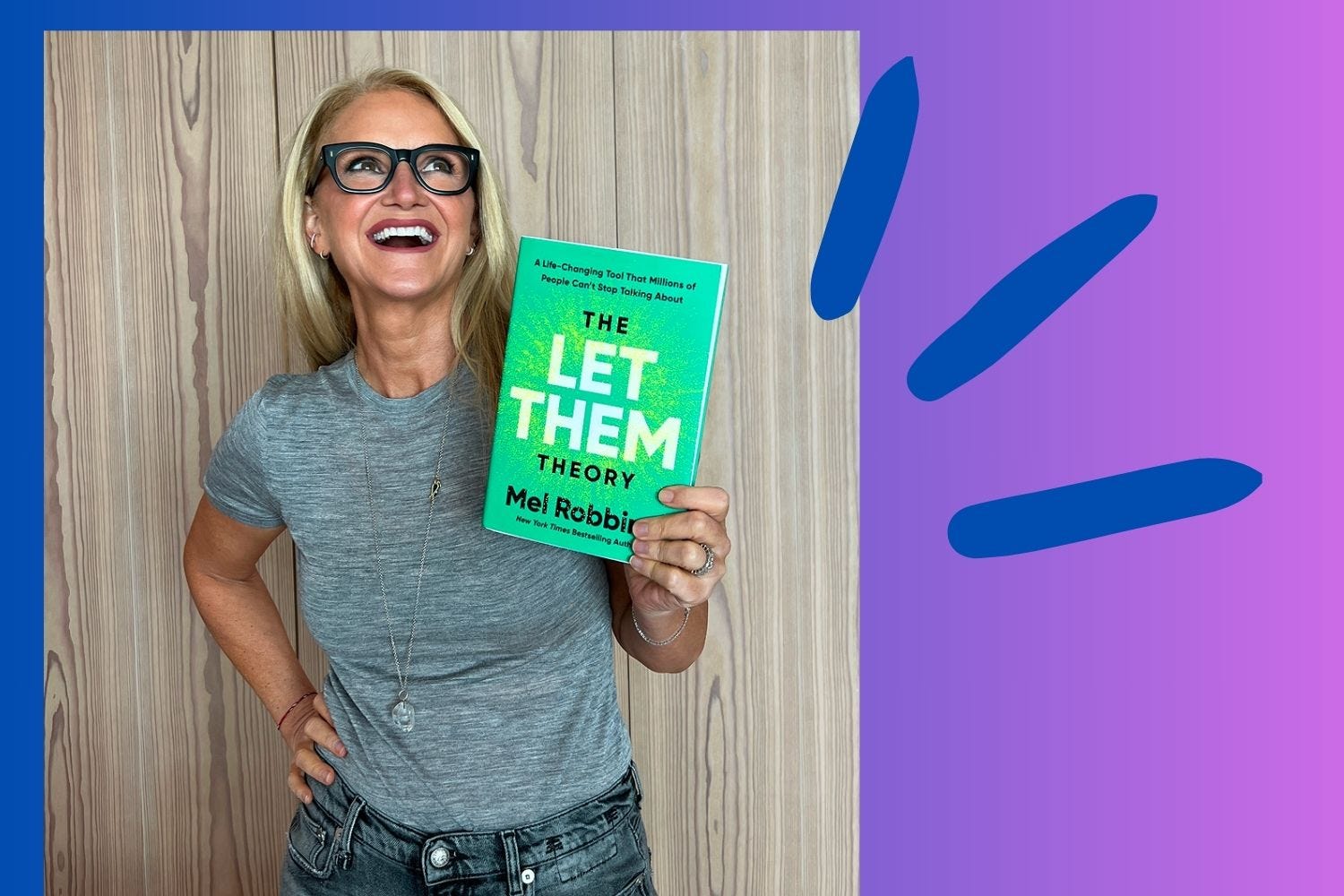
And it's not just coaches. A woman who created a viral shadow work journal on TikTok is now one of the biggest names in self-help. The journal involves fill-in-the-blank prompts like "I always feel like I'm the ___ one" and "For some reason, I always end up ___." It's essentially mad libs for your psyche. Shadow work, by the way, comes from deep Jungian psychology. It's heavy, complex material that even trained therapists approach carefully. But on TikTok, it became a trend.
I get nervous about this because I lived it. Before I got sober, I went through a phase where I was deeply wrapped up in spiritual self-help. I thought manifestation and spiritual gurus would save me from what was actually a severe mental health problem. I watched the concepts blur together — negative energy was why I was holding onto weight, I wasn’t manifesting properly and that’s why my life wasn’t where I wanted it to be. I beat myself up for not doing it right when what I actually needed was therapy and, eventually, to stop drinking. So when I see these products go viral, I don’t just see a trend. I see the version of myself that was desperate for answers and reaching for the wrong ones.
The Words Lost Their Meaning
Researchers call what’s happened concept creep — when psychological terms expand so far from their original definitions that they stop meaning anything. Gaslighting used to describe a calculated pattern of manipulation where someone systematically makes you doubt your own perception of reality. Now it means any disagreement. Narcissist was a clinical diagnosis. Now it’s anyone who was selfish in a relationship. Trauma dumping described sharing graphic, unsolicited details about traumatic experiences with no awareness of the other person’s capacity. Now it means telling someone your grandmother died.
A recent survey found that 95% of Americans hear therapy terminology daily, but most don’t understand its clinical meaning. One in four say therapy speak gets weaponized in arguments. We have more language for our pain than any generation before us, and somehow it’s made it harder, not easier, to actually communicate.
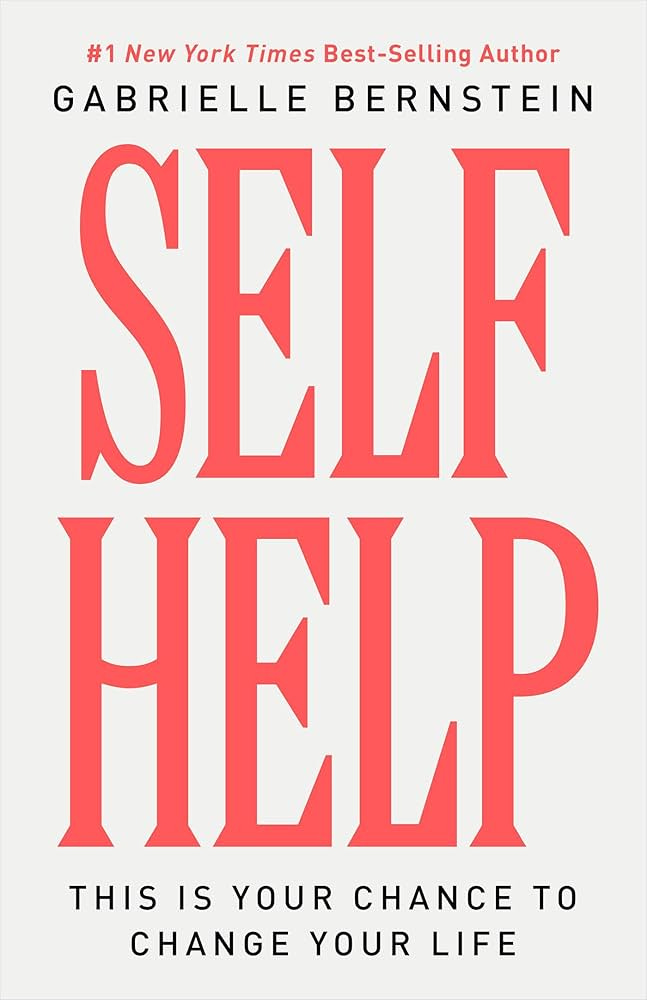
I want to be clear: a lot of this content genuinely helps people. People find community, feel seen for the first time, learn something useful. This content reaches people who would never walk into a therapist’s office, whether because of cost, stigma, or waitlists that stretch for months. I’m not saying burn it all down.
But we’ve created a world where the people most confidently giving mental health advice are often the least qualified to do so, where the algorithm rewards oversimplification, and where clinical language has become both armor and weapon. We have more resources than ever. And we are more stuck than ever. Those two things are not unrelated.
I keep coming back to something that I think matters: self-awareness without application is just a hobby called learning. You can know your attachment style, identify your trauma responses, and fill out every journal prompt on the internet. But if you’re so depleted from trying to fix yourself that there’s nothing left for the actual work of living differently, all that knowledge hasn’t gotten you anywhere. It’s just made you a more informed version of stuck.
We get into this much deeper in episode 97 of the podcast, so definitely give it a listen. But, have you noticed this shift? The feeling that mental health content went from genuinely helpful to something that’s making the overwhelm worse? I’d love to hear what you’re seeing.
Xx, Amanda
Amanda, thank you for giving this so much space. I have fallen victim to this and now feel like I can see it for what it is. Every discomfort is branded as dysfunction. With a product waiting on the other side. Pathology in perpetuity.
I want off the hamster wheel! Maybe we should all just get comfortable with being uncomfortable for a little while?
THIS ➡️ "When something is that profitable, it stops mattering whether the person selling it actually knows what they're talking about."
Unfortunately, Substack is flooded with self-help quotes and essays. I get it. Everyone wants to help and seem like they've got it figured out, but it's too much. It's cringe actually, but we can't say that if we want to be part of polite society. 🙃😆
Excellent article and what a horrible story at the beginning. It's an interesting topic all on its own. Do we share when someone has passed? How do we do it? How do these updates in FB sit side by side with general scrolling?